
Lot and House-Site Clearing in Piketon and Pike County, Ohio
Clearing a lot for a house near Piketon or Waverly goes best when the order is right. Septic and well layout come before machines, the stormwater permit needs weeks of lead time at one acre, and 811 has a new clock. Here's what to settle first and who decides it.
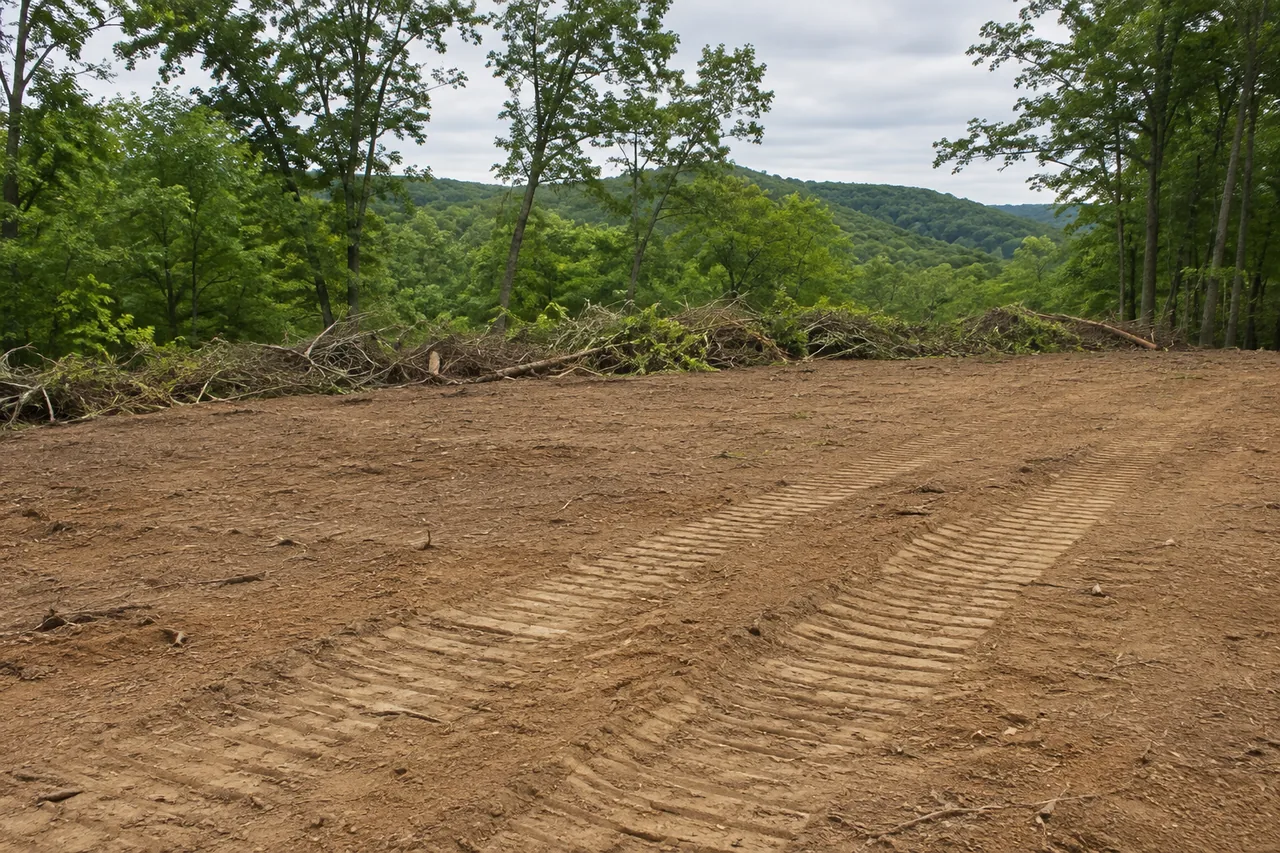
Start with septic, before any machine crosses the ground
If your lot will use a well and a septic system, the spot for that system is the most fragile thing on the property. Ohio's rule says: "The soil evaluator shall visit the site." It flags "areas with a slope greater than twenty five per cent" and "Any site disturbances such as excavated or fill areas." New lots go in front of the board of health too: "Proposed subdivisions and new lots shall be reviewed by the board of health."
The rule doesn't speak to compaction, so we won't claim a bulldozer ruins a system. The practical reading is simple: call the Pike County General Health District at (740) 947-7721 before the dirt moves, get the layout, and flag it off. Grading an area first can raise questions you'd rather not face after the fact.
Where a new well can go
Ohio's private water rule sets distances for a new system: 50 feet from "Any component of a sewage treatment system," 25 feet from streams and ponds, and 10 feet from lot lines. It also says a well "shall not be located within a one hundred year floodplain," with listed exceptions that include a board of health variance. It's barred from a floodway. On a bottomland lot, that can decide where the house goes.
The one-acre stormwater line
Ohio's Construction General Permit applies at one acre, and it counts "clearing, grading, excavating, grubbing and/or filling activities." Under an acre can still be covered if the lot is part of a larger common plan of development or sale. What that means in practice:
- File at least 21 days ahead. "Coverage under this permit is not effective until an approval letter" is received.
- The fee is real. "The NOI fee for small (one to five acres) construction activities is $200."
- Who's on it: the fact sheet says the owner and primary contractor are typically the permittees. Settle who files before the job starts.
- Stabilize fast: within seven days at final grade, and within two days if you're within 50 feet of surface water.
- Sediment controls are required for sites disturbed more than 14 days, with barriers in place before grading.
- Stream buffer: "If feasible, provide and maintain a 50-foot undisturbed natural buffer."
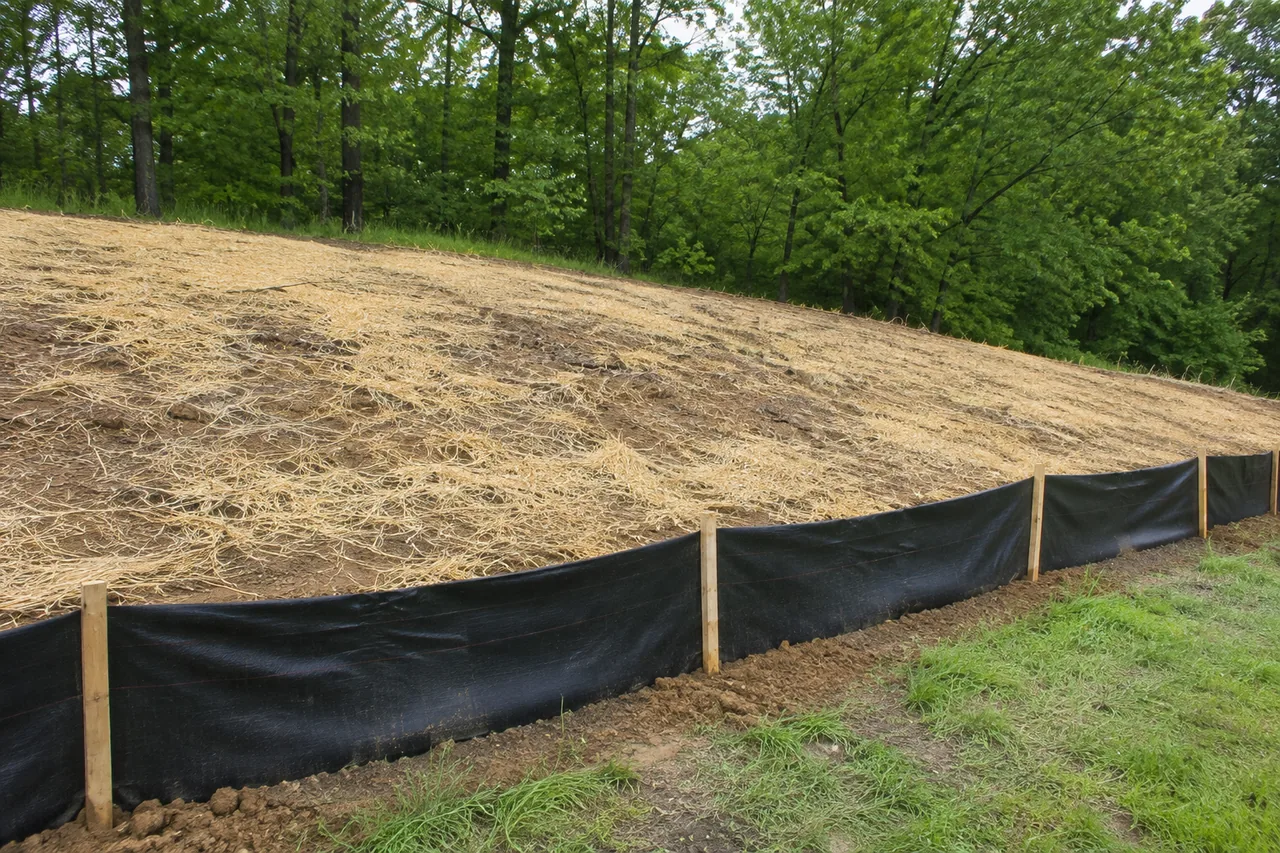
Ohio EPA's Southeast District is at (740) 385-8501, and stormwater staff are at (614) 644-2001.
Call 811, and know what it will not mark
Ohio's law changed on June 9, 2026. Notice now has to be given "at least two working days, not including the day of the notification," and "not more than sixteen calendar days before commencing excavation." Some older pages still show the earlier wording, so go by the statute. Call 8-1-1 or 800-362-2764.
The law's definition of a utility leaves out owners of homes, farms and similar property for lines on their own land. That likely means 811 won't mark your own well line, septic line or buried farm power. If there's an old house or barn on the lot, walk those with someone who knows where they run. There's more on the stump grinding page.
Driveways, zoning and building permits
- Driveway onto a county road: Pike's permit rule and culvert minimums weren't something we could read online. Call the County Engineer & Highway Department at (740) 947-4259 before cutting a new drive. The office is closed Fridays.
- Driveway onto a state route: ODOT has permit authority under ORC 5515.01. Ask ODOT's District 9.
- Land use in the county: ask the Pike County Planning Commission, (740) 947-9573, and your township. Which office issues building permits in unincorporated Pike wasn't something we could settle from what's published, so ask them first.
- In Piketon: the village lists Building & Zoning at 740-289-2581 and a zoning officer at (740) 289-4424.
- In Waverly: zoning permits come from the Mayor's office, 740-947-5162. Waverly's site says building permits go through the Ross County Building Department.
What commonly goes wrong
- Machines cross or grade the septic area before the layout exists.
- Nobody marks the property line, and a neighbor's trees come down. Ohio law makes reckless cutting of another person's trees a treble-damages matter.
- A cleared slope sits bare through a wet spell, and the soil goes downhill. See the hillside page.
- The brush pile gets lit as if it were yard waste. Land clearing waste has its own Ohio rule.
- Stumps get ground under a future footing when they should have come out.
Who this page is not for
If you just want brush gone and nothing built, you likely don't need a graded pad at all, and forestry mulching may be a better fit. If it's a big tract headed for pasture, see acreage and pasture clearing.
What it costs
National guides, not local prices: Fixr puts one acre with site preparation at $2,500 to $5,000, with most paying about $3,000. Angi's light clearing runs $500 to $2,000 an acre and dense clearing $3,600 to $5,600. A half-acre wooded house site at Angi's dense figure would be about $1,800 to $2,800 before stump removal, grading or the driveway. The contractor's written quote is what counts. See the cost page.
Common questions
Do I need a permit to clear my own lot?
It depends on acreage, water and what you're building. One acre of clearing brings in Ohio's stormwater permit. Wetlands and streams have their own rules. The permits page sorts it by job.
How far ahead should I start?
If you're at an acre or more, the stormwater filing alone is 21 days ahead of the start. Add time for the health district's layout and any driveway call.
Who calls 811, me or the contractor?
The law's definition points to the people doing the digging: "the person or persons responsible for making the actual excavation." Ask to see the ticket.
Can I save the good trees?
Usually, if they're marked before work starts. Say which ones matter, and put it in the written contract.
How this site can help
Tell us the road, the acreage and where the house is going. One independent contractor who serves your part of Pike County gets the request, walks the lot and writes up a price.
Related pages
Sources
- OAC 3701-29-07, soil evaluation for septic
- OAC 3701-29-08, new lots and subdivisions
- OAC 3701-28-07, private water system location
- Ohio EPA Construction General Permit OHC000006, effective Apr 23, 2023
- Ohio EPA construction stormwater fact sheet, February 2023
- ORC 3781.28, notice before excavating, effective June 9, 2026
- ORC 3781.25, excavation and utility definitions, effective June 9, 2026
- OHIO811 summary of House Bill 227
- Pike County, offices and departments
- Pike County Engineer & Highway Department
- Pike County Planning Commission
- Pike County General Health District, contact page
- ORC 5515.01, state highway permits
- Village of Piketon offices
- Village of Piketon ordinances and zoning officer
- Waverly zoning and building page
- ORC 901.51, cutting another person's trees
- Fixr, land clearing and site preparation, Jan 31, 2025
- Angi, land clearing cost, 2025 data
Read November 2026. Rules change, so check the office that decides before you rely on any of this.
Got ground that needs clearing?
Call, or send a few details online.