
Forestry Mulching in Piketon and Pike County, Ohio
Forestry mulching near Piketon or Waverly usually means a tracked machine chewing bush honeysuckle, autumn olive and small trees into a chip layer where they stand. It leaves no pile to burn, which matters in a county the state names for wildfire risk. Here's what it suits, what it can't do, and what to plan around.
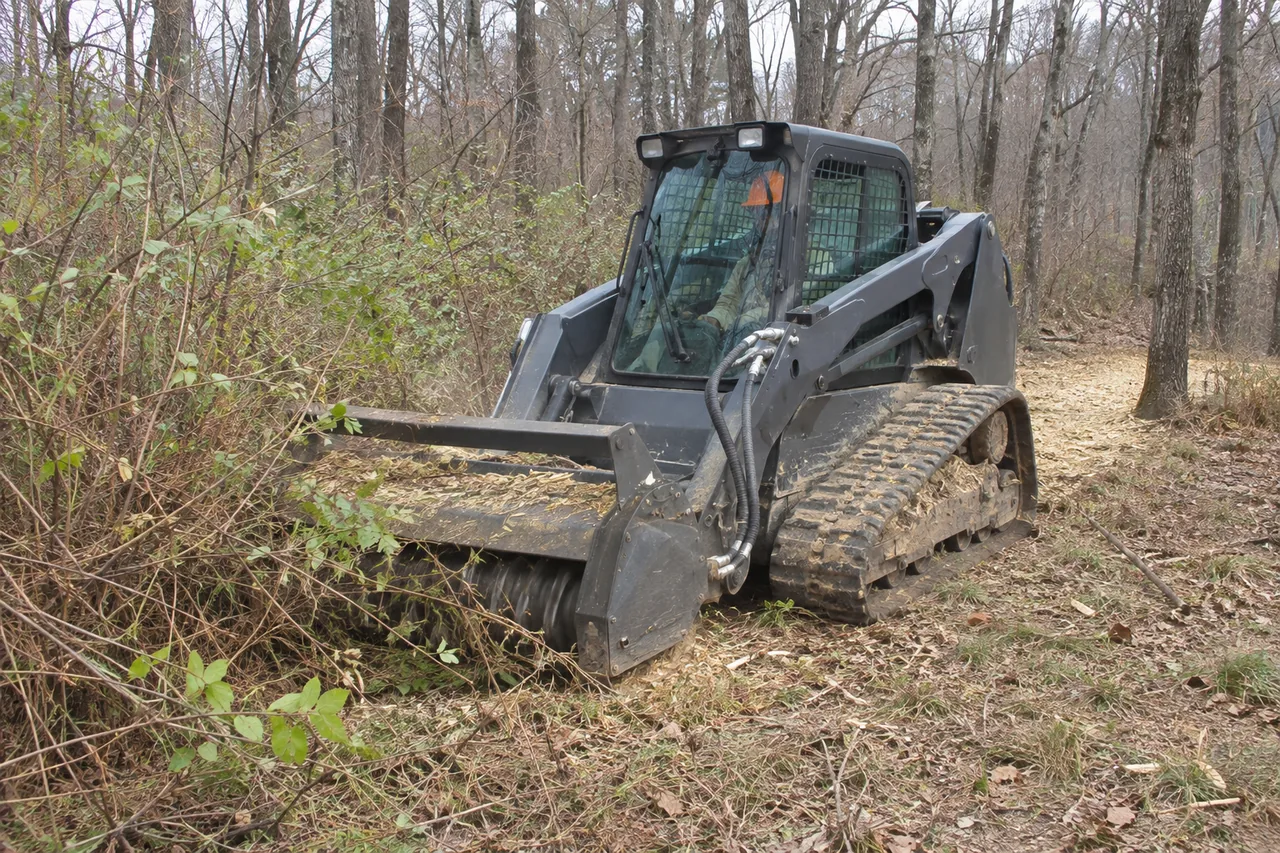
What the machine does, and what stays behind
A mulching head is a spinning drum of teeth on the front of a tracked loader or excavator. It grinds standing brush and small trees into chips and leaves them on the ground. The stumps of larger stems stay where they are, cut low, and so do the roots.
That makes it a good fit when the land stays land: woods you want to walk through, an old field you want to see across, hunting lanes, trails, a fence line, a view. It's a poor fit where something gets built. A footing, a slab, a septic area or a driveway needs the stumps and roots out and firm soil underneath, and that's a house-site job instead. Chips left deep on a building spot just have to be scraped off later.
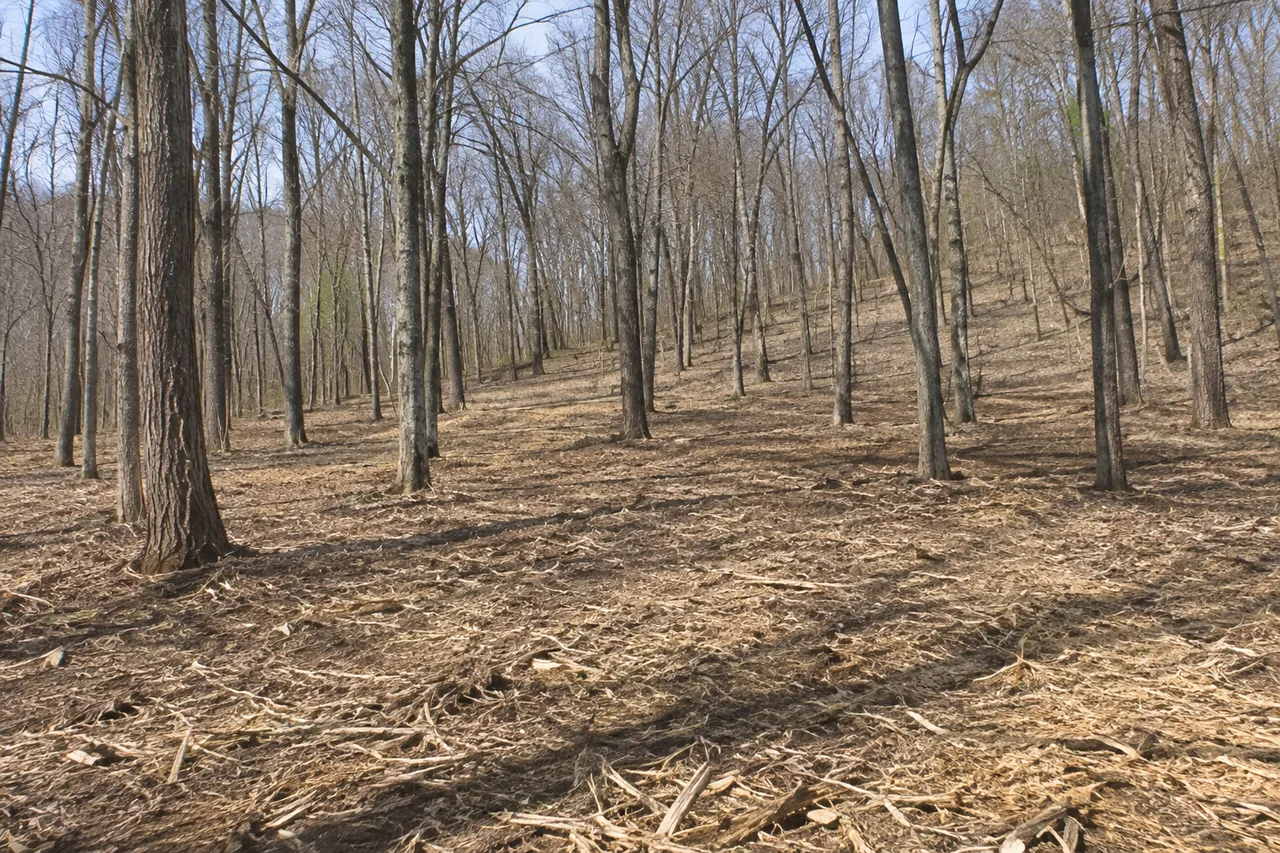
What's growing here
Ohio's invasive plant rule lists these four brush species: "Lonicera maackii, Amur honeysuckle," "Lonicera morrowii, Morrow's honeysuckle," "Elaeagnus umbellata, autumn olive," and "Ailanthus altissima, tree of heaven." The rule bans selling, propagating, distributing or importing them. Controlling and disposing of them are allowed. It doesn't order a landowner to remove them, so nobody should tell you the state requires the job.
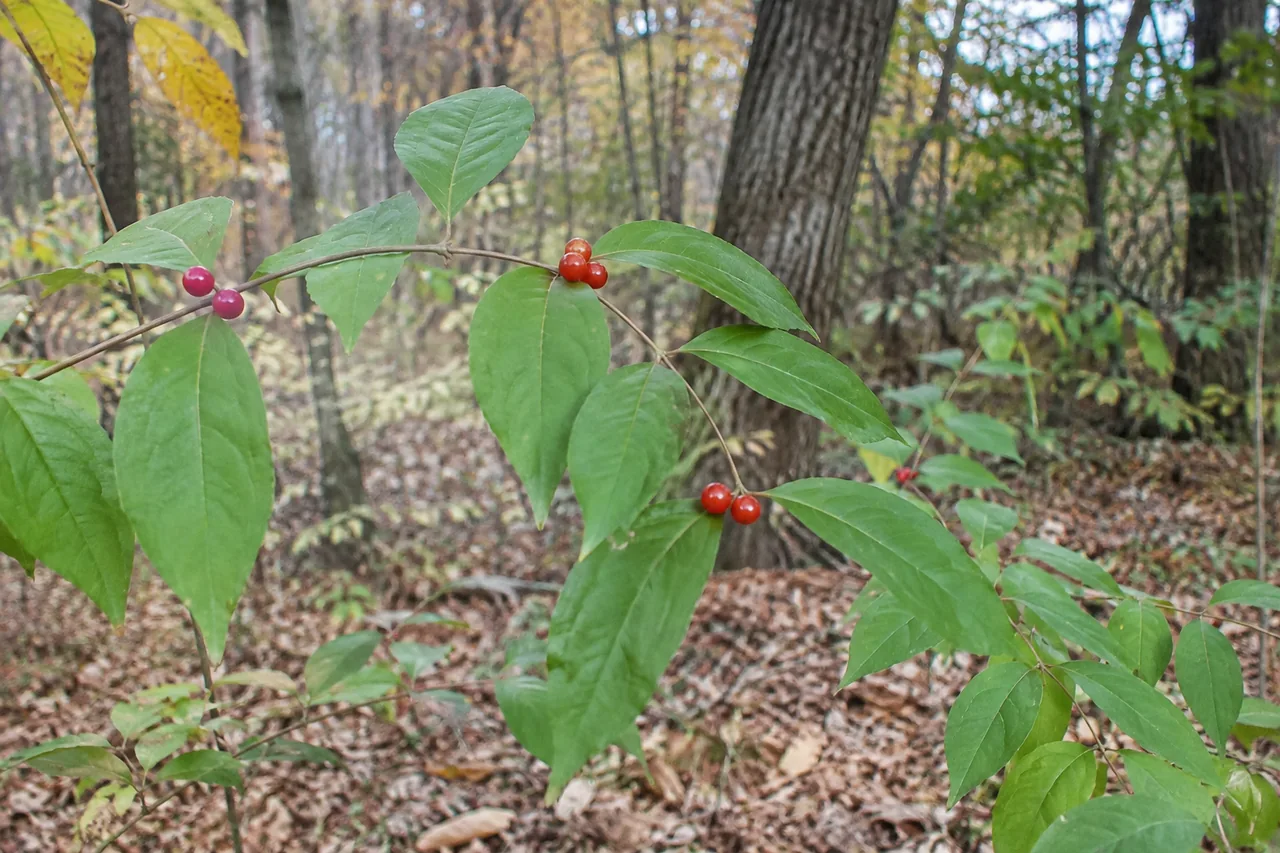
Mulching takes down the top growth. Ask the contractor plainly what happens next on your site: what regrowth to expect, when to look again, and what follow-up they'd suggest. Your county's Soil and Water Conservation District, at 740-947-5353, is a good place to ask about long-term control.
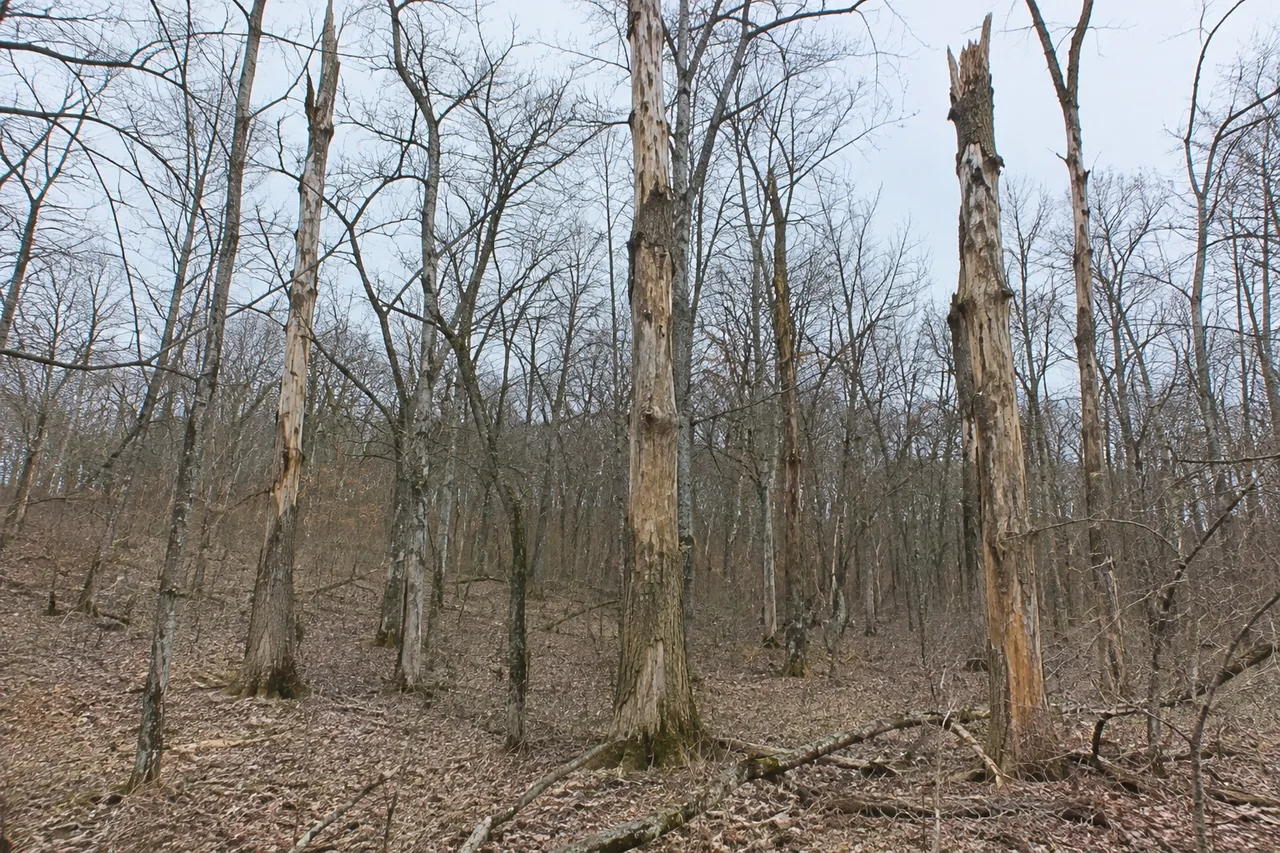
Dead ash is the part to take seriously. Ohio's State Forester has warned that dead ash has brittle limbs and trunks that break or blow over easily, and that it's a hazard to hunters and hikers. An infested ash usually dies in under five years. If your woods has standing dead ash, say so up front, because it changes how a machine and a person can work beneath it.
Timing: bats and wet ground pull in different directions
The Indiana bat and northern long-eared bat are both federally endangered. Ohio's bat guidance also names the tricolored and little brown bats. Within its capture-record buffers, that guidance recommends cutting trees "October 1 – March 31." It also says that window "applies to state recommendations only," and it's written for project proponents. No permit turned up that's triggered by private tree clearing alone. A law firm's summary of the listing says unpermitted take of an endangered bat can bring civil or criminal penalties, and it treats clearing during hibernation as the lower-risk approach.
Winter is also when hill ground can be at its softest. USDA describes the Rarden soil, whose type location is next door in Jackson County, as coming from soft clay shale with a perched water table 1 to 2 feet deep from January through April. Quote: "Permeability is slow." Whether that soil is on your parcel takes a soil map, but on ground like it, our reading is that tracks in late winter may rut. Late fall and early winter may be the window worth asking about, and a contractor who has worked your kind of ground can tell you what they'd do.
Mulching still touches a few rules
- Burning: mulching in place leaves no brush pile, so Ohio's strict land clearing burn rule usually doesn't come up.
- Stormwater: Ohio's construction permit covers "clearing, grading, excavating, grubbing and/or filling activities" at one acre or more. If you're mulching ahead of building, ask Ohio EPA's Southeast District, (740) 385-8501, how it applies.
- Wetlands: Ohio EPA lists mechanical clearing in wetlands among the activities that can be regulated, on private land too. Wet woods along a creek are worth a call first, at 614-644-2001.
- Boundaries: Ohio law makes anyone who recklessly cuts or injures trees on another person's land liable in treble damages. Mark the lines before the machine unloads.
What it costs
No local price list turned up, so these are national guides. They disagree widely, and each is shown with its source rather than blended into one number.
| Source | National figure |
|---|---|
| Angi (2026 figures) | About $2,000 on average; $150 to $300 an hour; $1,000 to $2,500 an acre |
| HomeAdvisor (no date shown) | $500 an acre on average; $400 to $1,500 an acre |
| Fixr (2025) and Bob Vila (2023) | $400 to $600 an acre. Bob Vila says this is in addition to any tree or brush clearing costs |
Worked example: three acres of brush works out to $1,200 to $1,800 at the Fixr and Bob Vila figures, and $3,000 to $7,500 at Angi's. Steep ground, thick stems, dead ash and a long haul for the machine are the things likely to push a real price up. The contractor's written quote is what counts. There's more on the cost page.
Common questions
Will mulching get rid of honeysuckle for good?
No source read for this page supports promising that. Mulching removes what's above ground, and the roots remain. Ask what follow-up the contractor would suggest, and ask the Soil and Water Conservation District about control.
Can a mulched area be built on later?
Not as it is. Stumps, roots and chips need to come out of the spot where a house, slab or septic area will go. The health district's septic layout should come first on a house site.
Do I need a permit to mulch my own woods?
No permit turned up that's triggered by mulching brush in dry woods by itself. Wetlands, streams and work that's part of a building project can change that. If you're not sure, call the office on the permits page that matches your job.
Can a mulcher work a steep hillside?
Often, but slope limits depend on the machine and the operator, and no figure here would be reliable. Leaving roots in place is the appeal on a slope. See the hillside page first.
How this site can help
Tell us the acreage, what's growing, how steep it is and how a trailer gets in. Your request goes to one independent contractor serving your part of Pike County, who can walk it and write up a price.
Related pages
Sources
- OAC 901:5-30-01, Ohio invasive plant species
- ODNR Division of Forestry on dead and dying ash, reprinted by Deerfield Township
- ODNR, State Bat Survey Guidance, May 2026
- U.S. Fish and Wildlife Service notice naming both federally endangered bats, June 27, 2023
- Bradley law firm summary of the northern long-eared bat listing, February 2023
- USDA NRCS, Rarden soil series
- Ohio EPA Construction General Permit OHC000006, effective Apr 23, 2023
- Ohio EPA, Know Before You Build (wetlands), January 2026
- ORC 901.51, cutting another person's trees
- Pike Soil and Water Conservation District listing
- Angi, forestry mulching cost, 2026 figures
- HomeAdvisor, forestry mulching cost, no date shown
- Fixr, land clearing and site preparation, Jan 31, 2025
- Bob Vila, cost to clear land, mod. Feb 28, 2023
Read November 2026. Rules change, so check the office that decides before you rely on any of this.
Got ground that needs clearing?
Call, or send a few details online.