
Hillside Land Clearing in Pike County, Ohio
Pike County's hills slip. The county has repeatedly had to design and repair road slips, and Ohio's hazard plan lists "Removal of vegetation and trees because of the loss of roots" among the causes of landslides. If you're clearing steep ground, here's what to think about before the roots come out.
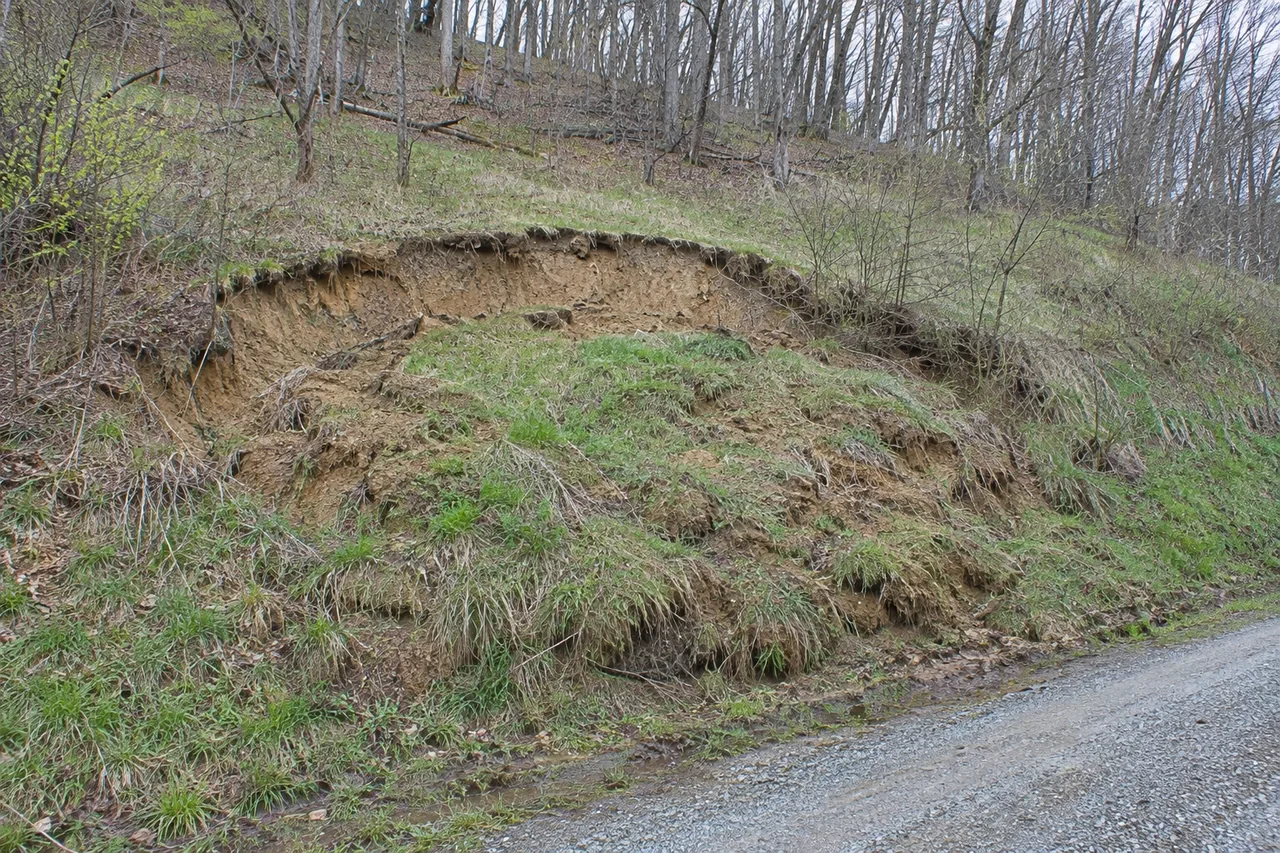
The county has repeatedly had to design and repair slips
Public project listings show Pike County road slip work for design or repair at least five times since 2023:
- Green Ridge Road, Mifflin Township (design, listed March 2023)
- Camp Creek Road: a drilled shaft retaining wall for an active slip, listed at $493,097 (a listing figure, not a confirmed final cost, March 2023)
- Long Fork Road, Newton Township (design, listed August 2023)
- Salyers Road near Piketon: a retaining wall for an active slip (listed February 2024). This listing names no owner. Its contact is the person named as Pike County Engineer on the Long Fork and Shyville listings.
- Shyville Road, Seal Township: design using a geohazard report (listed August 2024)
Pike County was also part of federal disaster declaration FEMA-4360-DR for "severe storms, flooding, and landslides," from February 14 to 25, 2018. A 2016 Cedarville University poster describes mapping slide susceptibility in northeast Pike County because of its terrain. The state plan gives Pike no specific susceptibility rating and doesn't name it among its high-incidence counties, so nobody can honestly call it the worst county. But slips here aren't a rare event.
Why clearing is part of the question
Ohio's hazard plan names "Removal of vegetation and trees because of the loss of roots" as a cause of landslides. It also describes "soft shales that weather rapidly and slip, slide, and flow."
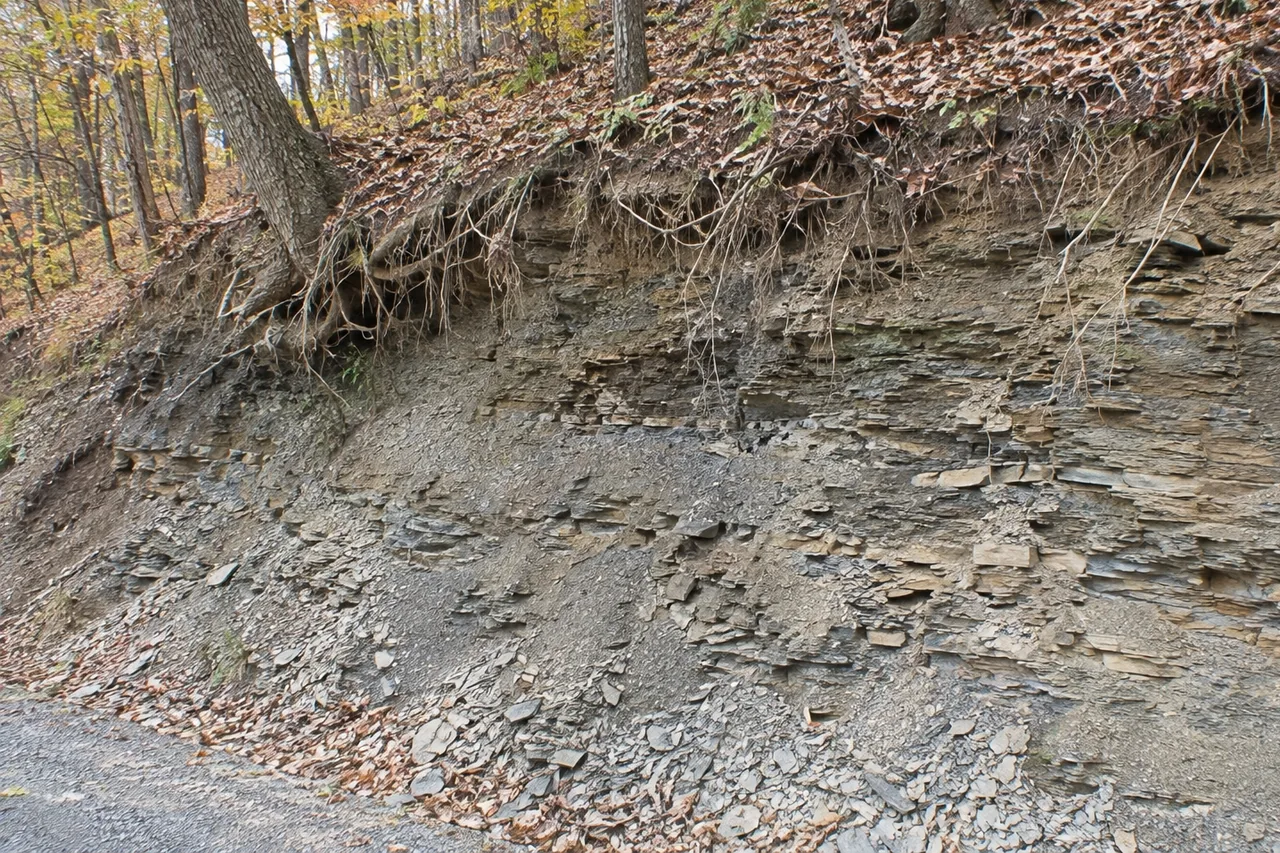
USDA's description of the Rarden soil gives a feel for the ground: hills of the dissected Allegheny Plateau, slopes of 2 to 50 percent, formed from soft acid clay shale, shale generally at 20 to 40 inches, and a perched water table 1 to 2 feet deep from January through April. Quote: "Permeability is slow." Its type location is in Jackson County, next door. Whether Rarden or something else is on your parcel takes a soil map, and Pike's 1990 soil survey is the reference to ask about.
Clearing doesn't guarantee a slide, and leaving trees doesn't prevent one. Nobody can promise either. What it does mean is that a hillside job deserves more thought than a flat one.
What to ask on a slope
- Do the roots have to come out? Since the state's concern is loss of roots, it's fair to ask whether a part of the slope that won't be built on can be mulched or cut and left rooted. No source we read tests that head to head, so treat it as a question for someone who has walked your ground, not a guarantee.
- Where does the water go? Cleared slopes and new cuts change it. Ask about seeps, ditches and what's downhill.
- What's below you? A road, a neighbor, a creek or your own house site changes how careful everyone should be.
- Which machine? Steep ground limits what can work safely. We don't quote slope limits here, because they depend on the machine and the operator.
- Do I need an engineer? If there's an active slip, cracks in the ground, or a building going above or below a steep cut, a geotechnical engineer's opinion is worth asking about before anyone clears it.
Timing is a real puzzle here
Three calendars overlap on hill ground:
| Calendar | What it says | What it means |
|---|---|---|
| Wet soils | Rarden description: perched water 1 to 2 feet deep, January through April | Our reading: tracks may rut and tear on clay-shale slopes in those months |
| Bats | Ohio guidance recommends "October 1 – March 31" within capture-record buffers | Winter cutting reduces risk, but it runs into the wet months |
| Burning | No open burning 6 a.m. to 6 p.m. in March, April, May, October and November, outside town limits | Daytime is out in those months. Ohio EPA's rule also has air curtain burners finish 60 minutes before sunset, so ask Ohio EPA whether any window is left |
Reading those together, late fall and early winter look like the most workable window on many hillsides. That's our reading of the three, not a rule. A dry spell can change it, and so can the job.
Septic, stormwater and bare soil
Ohio's septic rule flags "areas with a slope greater than twenty five per cent" and disturbed ground for the soil evaluator, so talk to the Pike County General Health District at (740) 947-7721 before grading. At one acre or more, Ohio's construction permit requires stabilization within seven days at final grade, and within two days within 50 feet of surface water. The house-site page has the order of steps.
Who this page is not for
If your slope is already moving, or the road or a building is cracking, start with an engineer and, for a county road, the Engineer & Highway Department at (740) 947-4259. A clearing contractor isn't the first call for that.
Common questions
Will clearing my hillside cause a slide?
Nobody can say for sure. Ohio's plan lists removal of vegetation and trees as a cause of landslides, and soft shales are prone to it. Ground, slope, water and the method all matter, so ask about roots and drainage before work starts.
Is mulching safer than grubbing on a slope?
It keeps roots in place, which speaks directly to the state's concern. No source we read proves it's safer on every slope, so ask someone who has seen your ground.
When is the best time of year to clear a hillside?
By our reading, often late fall or early winter, before the wettest months and within the bat guidance window. See the table above.
Is Pike County the worst place in Ohio for landslides?
The state plan doesn't rank it that way. It does list the county under the 2018 declaration, and county slip repairs are on the public record.
How this site can help
Tell us the road, how steep it is, and anything you've noticed about seeps or cracks. One independent contractor who serves your part of Pike County gets the request and can walk the slope with you.
Related pages
Sources
- Ohio EMA, State Hazard Mitigation Plan, landslide section, pp. 2-80 and 2-81 (Rev. 2/2019)
- FEMA-4360-DR declaration, Federal Register, May 8, 2018
- Green Ridge Road slip repair listing, Mar 2, 2023
- Camp Creek Road slip repair listing, Mar 15, 2023
- Long Fork Road slip repair listing, Aug 29, 2023
- Salyers Road slip repair listing, Feb 16, 2024
- Shyville Road slip repair listing, Aug 2, 2024
- Cedarville University poster on Pike County landslide susceptibility, 2016
- USDA NRCS, Rarden soil series
- ODNR, State Bat Survey Guidance, May 2026
- ORC 1503.18, fire near woods and banned hours
- OAC 3701-29-07, soil evaluation for septic
- Ohio EPA Construction General Permit OHC000006, effective Apr 23, 2023
- Pike County Engineer & Highway Department
- Pike County General Health District, contact page
- Pike County soil survey record (Hendershot, 1990)
Read November 2026. Rules change, so check the office that decides before you rely on any of this.
Got ground that needs clearing?
Call, or send a few details online.