
Who Clears Land Around Piketon: Hiring a Contractor
Land clearing around Piketon and Waverly gets done by a mix of excavating outfits, forestry mulching crews and tree services. This guide covers what kind of company fits your job, what the work involves, what to ask about the job, and what a written contract and deposit should cover.
The kinds of companies that do this work
- Excavating contractors. They bring excavators, dozers and dump trucks. They're a natural fit for house pads, driveways, stump removal, grading and drainage.
- Forestry mulching operators. A tracked machine with a mulching head, often one or two people. They suit brush, honeysuckle, trails and old pasture where nothing's being built.
- Tree services. They're used to taking down big or dangerous trees, including dead ash close to something you care about, plus stump grinding.
- Land and farm service operators. Often a mix of bush hogging, fence line work and light dirt work.
Plenty of jobs use more than one. A wooded house site might take a tree crew near the old barn, an excavator for the pad and a mulcher along the back line.
What the job involves
- Walking the ground. Lines, slope, water, soft spots, access, overhead wires, old farm lines.
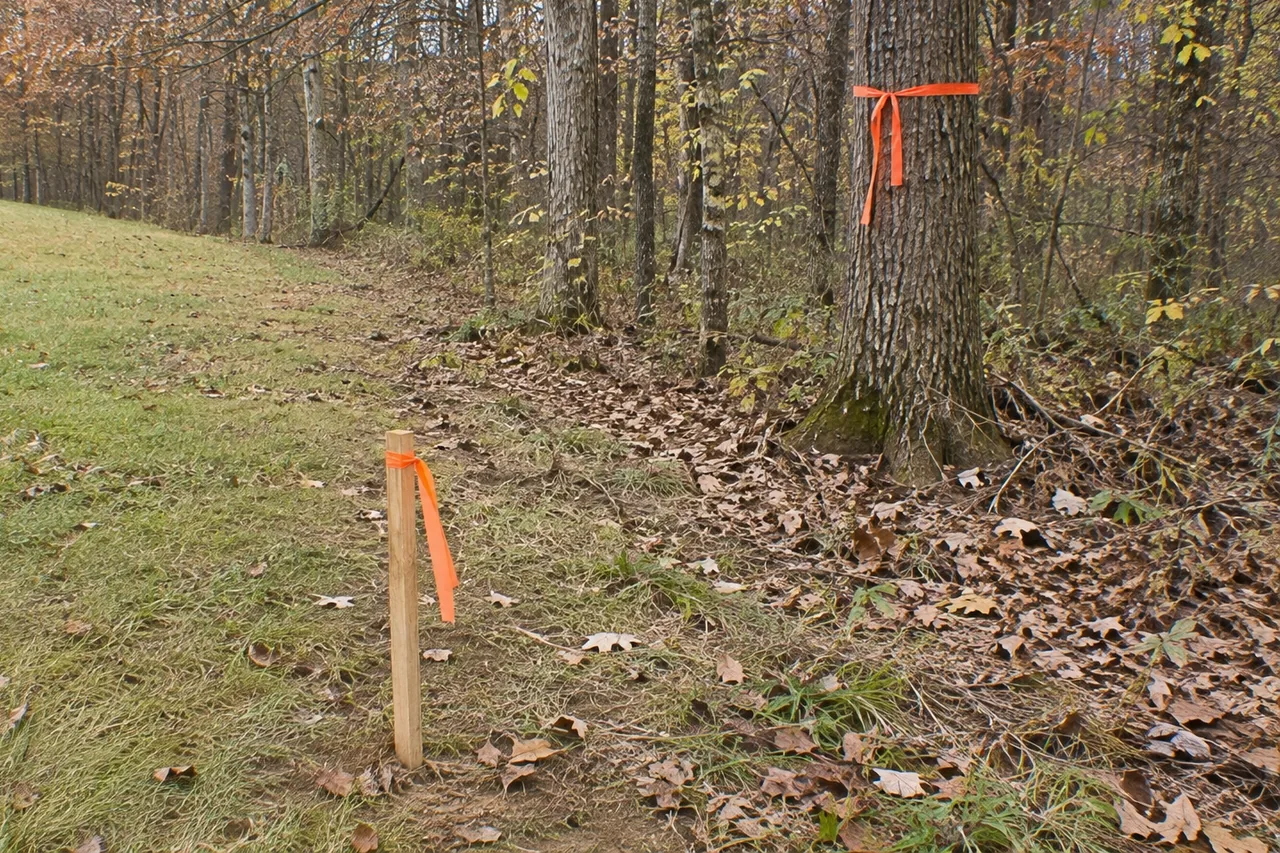
- Marking. Boundaries, the septic and well layout, trees that stay.
- Paperwork. 811 at least two working days ahead. Stormwater filing at least 21 days ahead for an acre or more. Burn permission, if any.
- Erosion controls. Silt fence or similar, before grading, where required.
- Cutting and clearing. Timber first if there's a sale, then brush and stumps.
- Debris. Mulch, haul or permitted burn.
- Finishing. Grading, seed and straw, and stabilizing bare ground on time.
Questions to ask about the job
- What machine would you use on this ground, and how would it get in without tearing up the lane?
- What would you do on the steep part? Do the roots need to come out there?
- Where does the brush go? If it's burned, who gets written permission from Ohio EPA?
- Who files the stormwater notice, and who sets the silt fence?
- Whose name is on the 811 ticket? How will you find my own well, septic and barn lines?
- When would you do it, given wet ground from January to April and the bat guidance window?
- What happens if the river or a long rain stops the job?
- What happens to dead ash, and how do you work around it?
- Can you show me a similar job you've done in hill country?
- Will you walk the line with me before you start?
What a written contract should cover
- Where: a map or flagged area, and the acreage.
- What stays: trees and areas marked to keep.
- Stumps and roots: left low, ground to a stated depth, or pulled.
- Debris: mulched, hauled or burned, and who handles it.
- Finish: rough or final grade, and seed and straw.
- Permits and notices: who files, who calls 811, and who pays any fee.
- Damage: fences, lanes, culverts and lawns.
- Schedule and weather: a start window, and what happens in a wet spell.
- Changes: how extra work gets agreed on and priced before it's done.
Deposits
Ask how much is due up front, what it's for, and when the rest is due. Get it in the contract, with the name of the business and how to reach them. A deposit tied to a clear start window and scope is easier to talk about later than one with neither. Payment tied to stages that you can see, such as machines on site or work finished, gives both sides something to point to.
Why the plan matters as much as the machine
Three things make this county's jobs go sideways, and each one traces back to planning:
- Fire. Ohio's plan names Pike for higher wildfire likelihood, with escaped debris burning the main statewide cause. See burning.
- Slips. The state lists "Removal of vegetation and trees because of the loss of roots" as a landslide cause. See hillsides.
- Lines. Reckless cutting on a neighbor's land is a treble-damages matter under Ohio law. Flag it first.
Common questions
Should I hire an excavator or a mulching crew?
If something's being built, you'll likely need an excavator for at least part of it. If the land stays land, mulching may be all you need.
How far ahead should I call?
Earlier is better if you need a stormwater filing, since that's 21 days. Wet months and burn rules can also narrow the working season.
Who answers when I call this site?
Your call or request goes to one independent contractor who serves your area. That contractor gives you their own price and does the work.
What does this site do?
It makes the connection and publishes these guides. The contract, permits, price and work are between you and the contractor.
How this site can help
Tell us about the land, and one independent contractor who serves your part of Pike County gets the request. You decide from there.
Related pages
Sources
- ORC 3781.28, notice before excavating, effective June 9, 2026
- Ohio EPA Construction General Permit OHC000006, effective Apr 23, 2023
- Ohio EPA construction stormwater fact sheet, February 2023
- OAC 3745-19-04, open burning outside restricted areas
- Ohio EMA, State Hazard Mitigation Plan, wildfire section, pp. 2-129 to 2-137 (Rev. 2/2024)
- Ohio EMA, State Hazard Mitigation Plan, landslide section, pp. 2-80 and 2-81 (Rev. 2/2019)
- ORC 901.51, cutting another person's trees
- ODNR, State Bat Survey Guidance, May 2026
- ODNR Division of Forestry on dead and dying ash, reprinted by Deerfield Township
Read November 2026. Rules change, so check the office that decides before you rely on any of this.
Got ground that needs clearing?
Call, or send a few details online.