
Acreage and Pasture Clearing in Pike County, Ohio
Got an old pasture around Piketon or Waverly that's gone to autumn olive and saplings, or woods you want back in grass? The first thing to know is that Ohio treats clearing for new farmland as land clearing, not farm burning. Here's what that changes, and what else to plan for on a big tract.
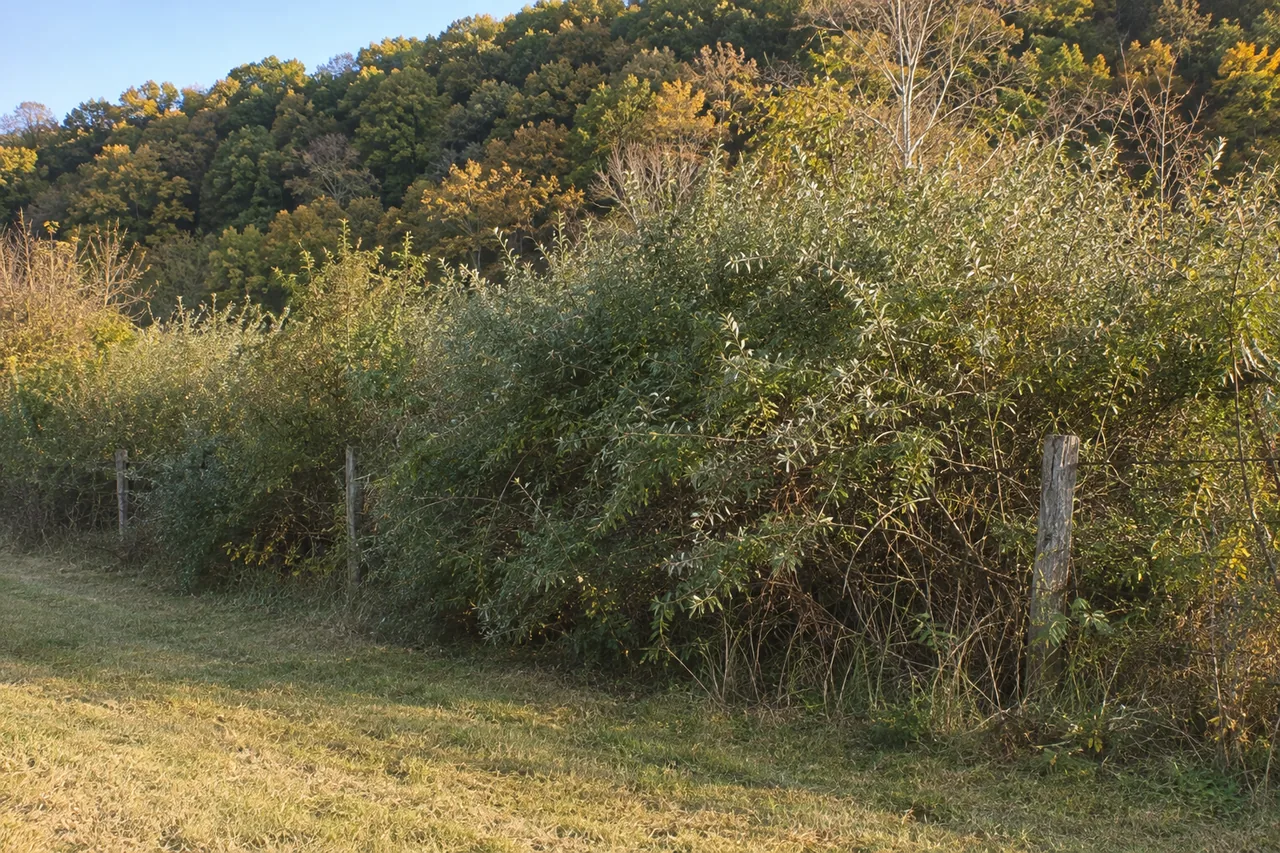
New pasture counts as land clearing
Ohio's open burning rule defines land clearing waste as "plant waste material which is removed from land" for development, and the definition includes clearing "for new agricultural development." The agricultural waste definition leaves land clearing waste out. So a landowner turning woods into pasture appears to be in the stricter category, not the farm one.
That matters because burning land clearing waste takes written Ohio EPA permission and an air curtain destructor or an approved equal, with no burning within 1,000 feet of an inhabited building off the premises. The burning page has the whole rule. If you've got a real gray-area case, such as brush regrowth on ground that's been in continuous farm use, ask Ohio EPA's Southeast District at (740) 385-8501.
It also shapes the method. Mulching in place, or windrowing and hauling, avoids the burn question.
What takes over an old field here
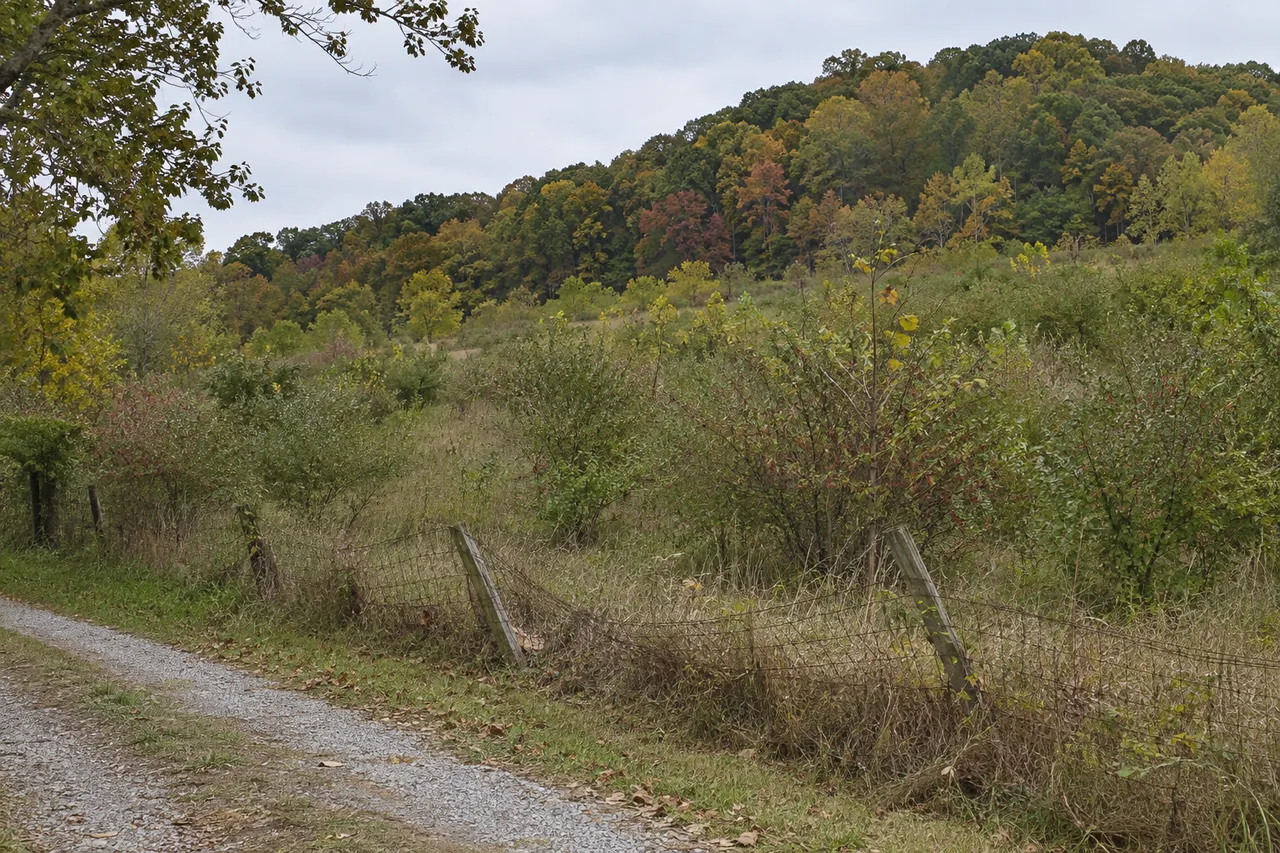
Autumn olive, Amur and Morrow's honeysuckle and tree of heaven are all on Ohio's invasive plant list. The rule bans selling and spreading them. It doesn't require you to remove them, so anyone saying the state makes you clear them is wrong. Also, a landowner on a tractor forum describes 40 acres in southern Ohio, once pasture and timbered around 2006, now saplings and multiflora rose on steep hillsides. If that sounds like yours, you aren't alone, and a walk of the ground is the place to start.
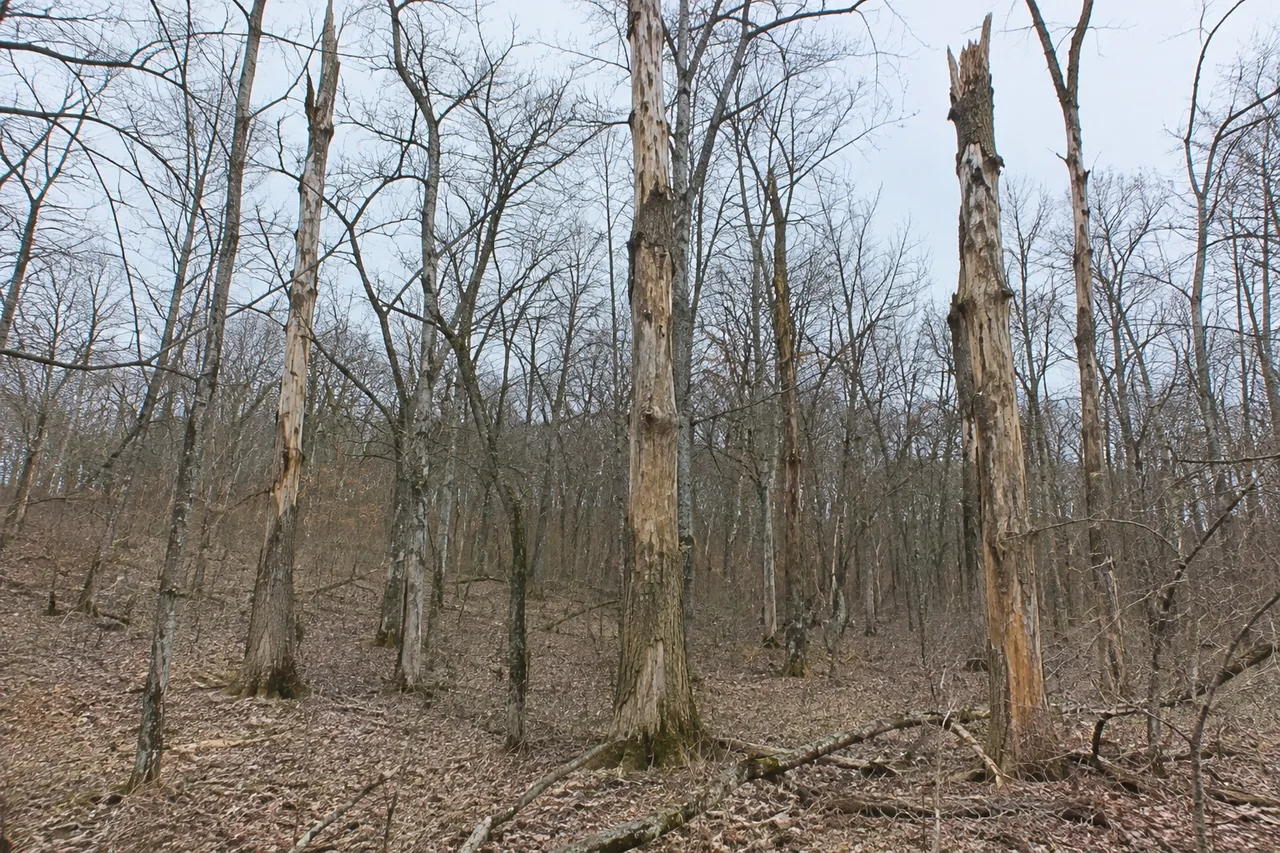
Standing dead ash: ODNR's State Forester warns that it has brittle limbs and trunks that break or blow over easily, and that it's a hazard to people in the woods. An infested ash usually dies in under five years. Say so if you have it.
Three decisions on a big tract
Timber sale, clearing, or both?
Ohio's forestry pollution rule covers timber harvests and forest roads, while clearing for development falls under the construction stormwater permit. One job can involve both. One Ohio soil and water district, Clermont's, tells landowners that they carry responsibility for water pollution from a harvest, and that's worth confirming here with Pike Soil and Water Conservation District at 740-947-5353. ODNR Service Foresters also advise landowners.
Mulch, or grub out the roots?
Mulching leaves roots in place, but stumps stay low in the field. Grubbing takes roots and stumps out, which suits ground you'll plow or mow hard, but it leaves soil bare. On a slope, the state's hazard plan lists "Removal of vegetation and trees because of the loss of roots" among the causes of landslides, so read the hillside page first.
When?
Ohio's bat guidance recommends "October 1 – March 31" for tree cutting within capture-record buffers. It's a recommendation, and it's aimed at project proponents. The federal take ban still applies to people generally. Bat records for Pike County specifically weren't something we could find. Fall and early winter often leave the most room, since hill ground can be wet from January through April.
Rules that can reach a big job
- Stormwater: one acre or more of clearing, grading or grubbing for construction. Whether a farm job is excluded wasn't something we could confirm, so ask (614) 644-2001.
- Wetlands: Ohio EPA says mechanical clearing can be regulated, on private land. Quote: "must obtain proper permits prior to beginning any type of earth moving activity."
- Streams: the permit's 50-foot natural buffer, "if feasible," and two-day stabilization within 50 feet of surface water.
- Boundaries: long lines through old woods are easy to get wrong. Reckless cutting on a neighbor's land carries treble damages. The county's Property Map Office is at (740) 941-1906.
A note on the PORTS project
As of November 2026, Pike County's own page describes the PORTS-Pike Technology Campus on and next to the former plant at Piketon, on Department of Energy and private land. It gives the status as "First phase construction expected to begin in 2026" and says the project is "estimated to generate 35,000 construction jobs and approximately 2,500 permanent jobs." The county says it's still reviewing an agreement. This site can't tell you how the project affects any one parcel. The county's project line is (740) 835-8606.
What it costs
National guides, not local prices. Angi lists light clearing at $500 to $2,000 an acre and dense clearing at $3,600 to $5,600. Worked example: ten acres works out to $5,000 to $20,000 at the light figure and $36,000 to $56,000 at the dense figure. Forestry mulching figures run lower but disagree widely, from $400 to $2,500 an acre. Big tracts may not scale in a straight line, so treat these as a rough guide. The written quote is what counts. See the cost page.
Common questions
Can I burn the brush if the land is going back to pasture?
Treat it as land clearing waste. Ohio's definition includes clearing "for new agricultural development," and that takes written Ohio EPA permission and an air curtain device or approved equal.
Do I have to get rid of autumn olive?
Ohio's rule doesn't require it. It bans selling and spreading the plant. Removal is your choice.
Should I sell the timber first?
If there's value in it, it's worth asking a forester before anything gets mulched. ODNR Service Foresters and the Pike Soil and Water Conservation District are the places to start.
How do I know where my lines are?
Start with your deed and the Property Map Office, and use a surveyor for anything uncertain. Flag the line before work starts.
How this site can help
Tell us the acreage, what's on it and what you want it to be. One independent contractor who serves your part of Pike County gets the request, walks the tract and writes up a price.
Related pages
Sources
- OAC 3745-19-01, open burning definitions
- OAC 3745-19-04, open burning outside restricted areas
- OAC 901:5-30-01, Ohio invasive plant species
- ODNR Division of Forestry on dead and dying ash, reprinted by Deerfield Township
- OAC 1501:3-12-01, forestry pollution rule, effective Dec 18, 2025
- Clermont Soil and Water Conservation District, call before you cut
- Pike Soil and Water Conservation District listing
- Ohio EMA, State Hazard Mitigation Plan, landslide section, pp. 2-80 and 2-81 (Rev. 2/2019)
- ODNR, State Bat Survey Guidance, May 2026
- Ohio EPA Construction General Permit OHC000006, effective Apr 23, 2023
- Ohio EPA, Know Before You Build (wetlands), January 2026
- ORC 901.51, cutting another person's trees
- Pike County, offices and departments
- Pike County, PORTS-Pike Technology Campus page
- Angi, land clearing cost, 2025 data
- Angi, forestry mulching cost, 2026 figures
- HomeAdvisor, forestry mulching cost, no date shown
- Fixr, land clearing and site preparation, Jan 31, 2025
- TractorByNet forum question on southern Ohio hillside acreage
Read November 2026. Rules change, so check the office that decides before you rely on any of this.
Got ground that needs clearing?
Call, or send a few details online.